
You finally get a meeting with a massive enterprise client. You sit down, open your laptop, and before you can even introduce yourself, their legal counsel slides a 12-page Non-Disclosure Agreement (NDA) across the table.
"Sign this before we talk," they say.
Many founders and sales reps will blindly sign it because they are desperate for the revenue. That is a massive mistake.
An NDA is not a casual piece of paperwork. It is a legally binding gag order. If you sign a poorly written, one-sided NDA, you can accidentally lock yourself out of working with other clients in that industry, or worse, expose yourself to massive financial liability.
Conversely, if you send an overly aggressive NDA to a prospect too early in the sales cycle, you will kill the deal before it starts.
Here is exactly when, why, and how to use NDAs and confidentiality clauses in your proposals.
1. When to Use an NDA (Timing is Everything)
Do not ask a prospect to sign an NDA before a discovery call.
If you are a marketing agency, a SaaS vendor, or a consultant, your initial pitch is not a state secret. If you require an NDA just to have a 15-minute introductory Zoom call, you look amateurish and paranoid.
The Rule: You only introduce an NDA when the conversation shifts from your capabilities to their proprietary data.
Client: "Your software looks great. But to give you an accurate quote, we would need to show you our internal customer database and our Q3 financial projections." You: "Perfect. Since we are moving into proprietary data, let's execute a Mutual NDA so your team feels completely comfortable sharing that with us during the scoping phase."
The NDA should act as a gateway to the deep discovery, not a barrier to the initial hello.
2. The Golden Rule: Mutual NDAs Only
If a client sends you an NDA, read the title immediately.
If it says "One-Way Non-Disclosure Agreement," push back immediately. A one-way NDA means you are legally bound to keep their secrets, but they are perfectly legally allowed to take your proprietary proposal, your custom pricing model, and your strategic framework and show it to your competitors.
Always insist on a Mutual Non-Disclosure Agreement (MNDA).
How to push back: "Our standard policy for enterprise engagements is a Mutual NDA. This ensures that while we protect your internal data during scoping, our proprietary pricing models and strategic frameworks are equally protected. I have attached our standard MNDA, or we can use yours if you can update it to be mutual."
No reasonable corporate counsel will fight you on a mutual NDA.
3. Protecting Your Proposal (The Confidentiality Clause)
Even if you don't sign a standalone NDA during the sales process, your actual proposal document must contain a strict confidentiality clause.
Your proposal is a blueprint of how you solve problems. If you hand a 20-page strategic proposal to a client, you do not want them using it as a free consulting document and handing it to a cheaper vendor to execute.
Include this exact clause in the footer or the terms section of every proposal you send:
"Confidentiality: This proposal and all pricing, strategies, and methodologies contained herein are the proprietary and confidential property of [Your Company]. By reviewing this document, [Client Company] agrees not to disclose, share, reproduce, or distribute this proposal to any third-party vendors, competitors, or external consultants without the express written consent of [Your Company]."
This puts the client on notice: This document is for their eyes only.
4. The "Residuals" Clause (The Hidden Trap)
If you are a consultant or an agency, you learn things from every client you work with. You take those learnings and apply them to the next client. That is how you build expertise.
If a client's NDA lacks a "Residuals" clause, you are in danger.
Without a residuals clause, a client could theoretically sue you five years from now, claiming that a strategy you used for a new client was based on "confidential knowledge" you learned while working for them.
What you need your lawyer to look for (or add): "Residual Knowledge: Nothing in this Agreement shall prevent the Receiving Party from using 'Residual Knowledge' (general ideas, concepts, know-how, or techniques) retained in the unaided memory of its personnel in the ordinary course of business, provided such use does not intentionally breach the confidentiality of specific proprietary data."
This protects your right to be an expert in your field without getting sued for using your own brain.
5. The Time Limit
An NDA should not last forever.
Information decays rapidly. The marketing strategy or the financial projections a client shows you today will be completely irrelevant in three years.
Never sign an NDA that says confidentiality extends "in perpetuity." Always push for a defined expiration date.
Standard Timeframes:
- Standard B2B Services: 1 to 2 Years.
- Deep Tech/Proprietary Code: 3 to 5 Years.
"This Agreement and the obligations of confidentiality hereunder shall expire two (2) years from the Effective Date."
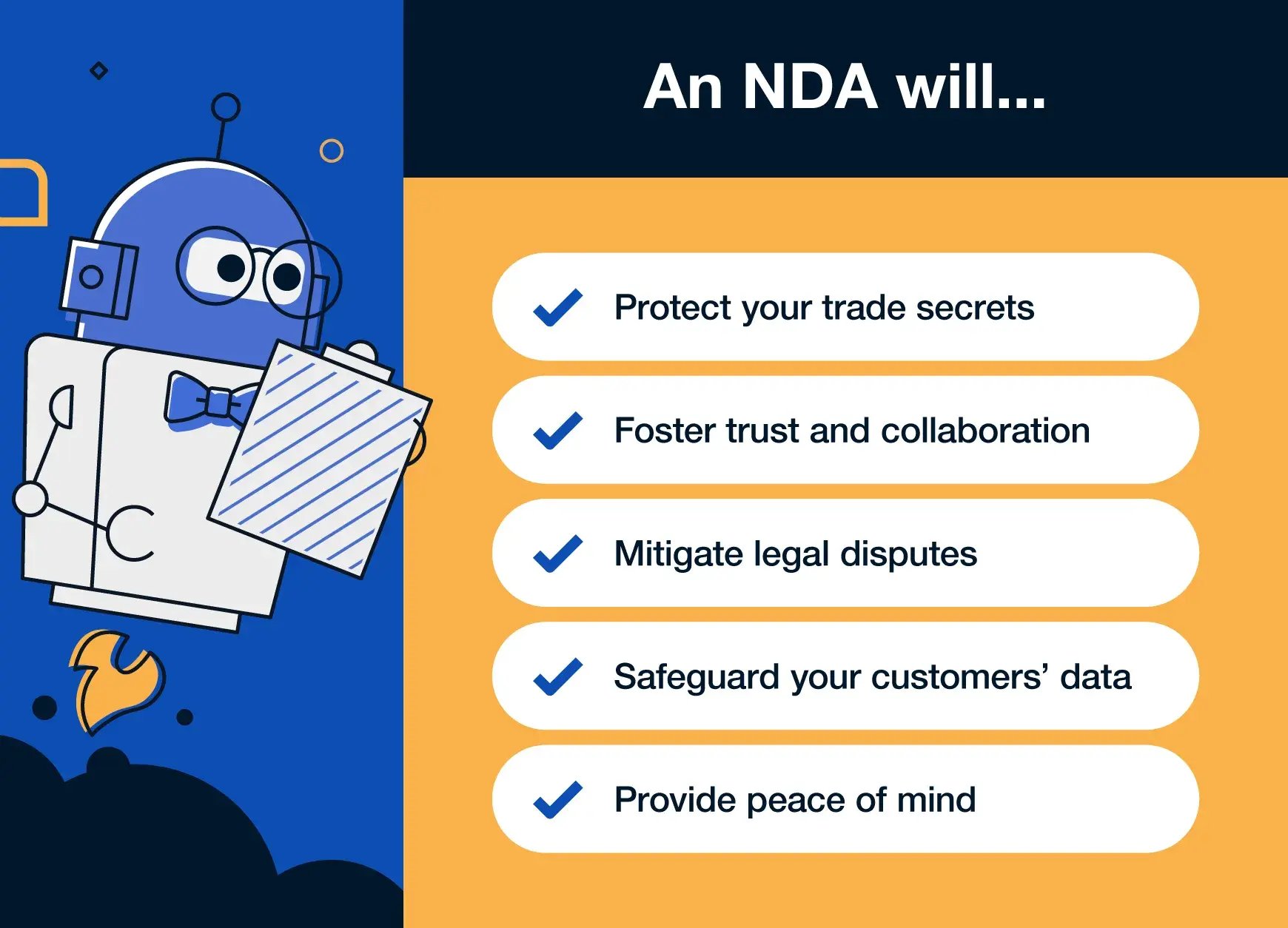
NDAs and confidentiality clauses are powerful tools when used correctly. They build trust with enterprise clients and protect your intellectual property. Standardize your Mutual NDA, bake a confidentiality clause into every proposal generated by your quoting software, and never sign a one-way agreement that leaves your pricing exposed.