
You want to land a $250,000 enterprise contract. You scrape a list of 500 VP-level executives on LinkedIn. You load them into an automated email sequencer, blast out a generic pitch about your agency's "award-winning culture," and attach a standardized 15-page PDF proposal showcasing your pricing tiers.
The result? Zero meetings booked. Three spam complaints.
You cannot hunt whales with a shotgun.
Volume-based outbound marketing works fine if you are selling a $2,000 commodity service. But if you want to win tier-one corporate clients—the "Dream Clients" that completely change your agency's financial trajectory—you must abandon volume. You must adopt the brutal precision of Account-Based Selling (ABS).
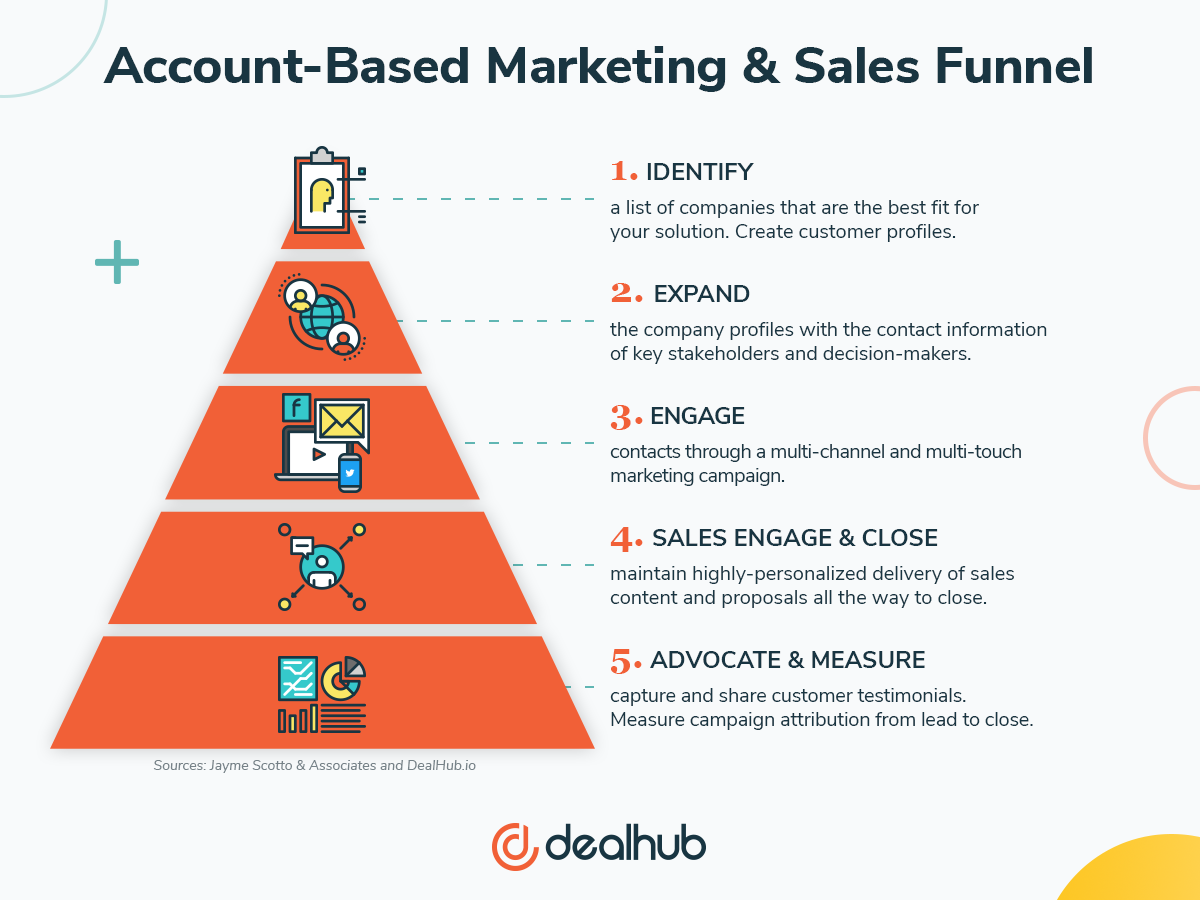
In ABS, you treat a single high-value target account as an entire market. You don't pitch a generic service; you reverse-engineer their specific corporate problems and present a hyper-tailored proposal that speaks directly to their balance sheet. Here is how to execute it.
 Account-Based Selling requires abandoning the shotgun approach in favor of sniper-like precision.
1. The "Trojan Horse" Proposal (Pre-Pitching)
Most agencies wait for a client to request a proposal. In enterprise ABS, the proposal is the outbound marketing tool.
You do not wait for an RFP (Request for Proposal). You proactively engineer a "Speculative Architecture" document. This is a highly customized, unsolicited proposal sent directly to the decision-maker.
The Strategy: Identify a public-facing vulnerability in your target's business. If you are an SEO agency, find the exact high-intent keywords their biggest competitor is stealing from them. If you are a dev shop, find the exact page-load latency issues causing cart abandonment on their app.
Do not ask for a meeting to "discuss their goals." Build a mini-proposal that highlights the exact financial cost of their current vulnerability, outline a high-level technical fix, and send it to them. You are offering consulting value before they have paid you a dime. You use the proposal as a Trojan Horse to bypass the gatekeepers and force a strategic conversation.
2. Reverse-Engineering the P&L (Speaking CFO)
Enterprise deals are not approved by the Marketing Director. They are approved by the Chief Financial Officer (CFO) or the VP of Finance.
These executives do not care about "brand synergy," "modern UI," or "agile methodology." They care about EBITDA (Earnings Before Interest, Taxes, Depreciation, and Amortization). They care about cash flow, risk mitigation, and margin expansion.
If your proposal does not explicitly connect your deliverables to their Profit & Loss (P&L) statement, you will lose the deal.
 If your proposal doesn't map directly to a financial outcome, the CFO will kill the deal.
How to structure the financial narrative: Do not just list your $150k price tag. Frame it as a capital allocation with a definitive payback period.
"Currently, your legacy CRM causes a 12% lead-leakage rate, costing an estimated $1.2M in lost annual revenue. Our $150,000 custom Salesforce architecture implementation will patch this leak. The projected payback period on this capital expenditure is 45 days post-launch, yielding a net-positive cash flow by Q3."
When you frame your proposal as a high-yield financial asset rather than an agency expense, the CFO stops looking for a discount and starts looking for an implementation date.
3. The Executive Alignment Matrix
A $200k contract is never decided by one person. According to Gartner, complex B2B enterprise deals involve an average of 6 to 10 decision-makers.
If you send a proposal that only speaks to the Chief Marketing Officer, the Chief Technology Officer (CTO) will shoot it down because you didn't address data security.
An Account-Based Proposal must contain an Executive Alignment Matrix. You dedicate specific sections of the document to the exact operational concerns of every stakeholder in the room.
 Your proposal must disarm the unique objections of every executive in the boardroom.
The Section Breakdown:
- For the CEO: The 1-page Executive Summary focusing entirely on competitive market advantage and top-line revenue growth.
- For the CFO: The ROI timeline, the total cost of ownership, and flexible payment terms (e.g., milestone-based billing).
- For the CTO / CISO: The technical architecture, GDPR/SOC2 compliance, data privacy protocols, and the SLA for disaster recovery.
- For the VPs/Directors (Your Champions): The day-to-day workflow, project management methodology, and how this project will make their specific department look good.
You preemptively disarm the internal politics of the boardroom before the meeting even happens.
4. Scaling the Unscalable (The AutoQuote Advantage)
The fundamental problem with Account-Based Selling is that hyper-personalization is incredibly time-consuming.
If you ask your sales team to manually research a company, reverse-engineer their P&L, and draft a 40-page bespoke Word document for every target account, they will only be able to pitch two clients a month.
You cannot scale custom Word documents. You must automate the personalization layer.
By running your ABS motion through a quoting engine like AutoQuote, you separate the custom strategic narrative from the heavy technical boilerplate.
The Workflow:
- Your rep writes a highly personalized, 2-page strategic brief focused entirely on the target client's specific business problem.
- They log into AutoQuote and paste that custom narrative into the Executive Summary block.
- They select the required technical deliverables from your pre-built service library (e.g., "Enterprise SaaS Architecture," "SOC2 Compliance Framework").
- AutoQuote instantly pulls in the 30 pages of standard legal clauses, SLA timelines, security architecture diagrams, and calculates the exact margins.
You get the impact of a 40-hour bespoke consulting document, executed with the speed of a 5-minute automated workflow.
Stop sending the same PDF to 500 strangers. Pick 10 dream accounts, reverse-engineer their financial pain points, and build proposals that prove you understand their business better than they do.